let go and breathe
December 28, 2010
I understand Nirvana is a Sanskrit word which means literally “breathing out”. Whewww. Letting go of your breath = a particular concept of heaven? So, if you cling to your breath, you will lose it. Interesting. It reminds me of the bible verse, Luke 9:24 – “For whoever wants to save his life will lose it…”
The concepts of clinging and letting go, transience and impermanence, living and dying, all fit together like a puzzle and transcend cultures and theologies.

waves of consciousness
December 27, 2010
Recognize the power of mind, respect the power of mind. And also recognize the power behind the power, the ocean holding the wave. Recognize yourself as the ocean, with your stories, your feelings, as waves.
Waves can be beautiful or terrifying, but always… they return to the ocean. Every wave always is made up of the ocean. No wave can ever be separate from the ocean. Waves of thoughts, waves of emotions, waves of sensations, waves of events, are all made up of consciousness.
And all return to consciousness, while never being separate from consciousness. And if this becomes another story, let this go, and see what is true.
– Gangaji
nondualism
December 21, 2010
And in stillness and silence, non-duality manifests. The Silence, the great Silence, the space between infinitesimal particles, the space between stars, the emptiness that exists alone, undivided, the only thing that is real is where non-duality exists.
– Won Bup Ahn-Letty Brelsford, Non-Dualism

cut the knot
December 21, 2010
One reason I had always been interested in Zen was my sense that for people like myself, trained in abstraction, Zen could serve as the ideal tonic.
For Zen, as I understood it, was about slicing with a clean sword through all the Gordian knots invented by the mind, plunging through all specious dualities—East and West, here and there, coming and going—to get to some core so urgent that its truth could not be doubted.
– Pico Iyer

value discernment
December 18, 2010
Ideas and trends might originate from the urban maw, but peace and tranquility are the hamlet’s domain.
– Scott Kinnaird

chasing bliss
December 17, 2010
Desire becomes addiction after you have that first little taste of something—alcohol, great sex, getting stoned—that comes so close to complete satisfaction…then you start chasing it.
The same thing happens in meditation: having that first bit of bliss, then it’s gone. You want the perfection back.
But you’re chasing something you’ve already lost. If you stay with that widening dissatisfaction and think, “Oh, yeah, of course,” then insight can begin to happen. In that gap.
– Mark Epstein, “The Merry-Go-Round of Desire”

meditate me home
December 17, 2010
Meditation is simply a method to go beyond your normal mind. And anyone who meditates cannot fall below the normal mind. That is an impossibility.
And anyone who meditates is sooner or later going to reach his real home — which is not only his, which is our home.
– Osho
it’s all right here
December 13, 2010
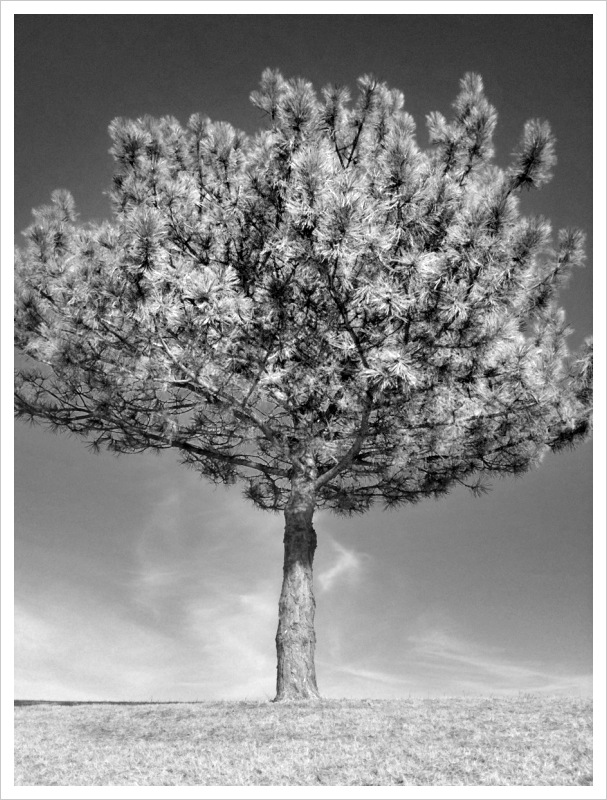
The wind has settled, the blossoms have fallen;
Birds sing, the mountains grow dark —
This is the wondrous power of Buddhism.
– Ryokan, (1758-1831)

reducing mental affliction
December 9, 2010
The big innovation of Buddhism is not in recognizing the suffering of a normal life, but in pointing out that mental afflictions are not intrinsic to the human psyche. Recent scientific research has shown that these afflictive tendencies of mind can be measurably lessened through Buddhist practice. But Buddhism is making a much stronger claim: that the mind at its deepest level has the nature of luminosity, of innate bliss, and is altogether free of mental affliction. That’s a big hypothesis. We can’t test it now, but we can head in that direction.
– B. Alan Wallace

open to anything new
December 7, 2010
Zen Master Dogen said that “not knowing is the most intimate thing.” Not knowing means to be open to all eventualities, to not prejudge a person or situation. If your mind is full of preconceived notions, there is no room for an unbiased view. It is like when your hands are full of objects, you cannot pick up anything new. A closed mind causes separation and suspicion. Like an umbrella, a mind is only useful when it is open. The first step toward maintaining an open mind is to understand the nature of mind or self.
-Gerry Shishin Wick