your hands are a miracle
February 24, 2011
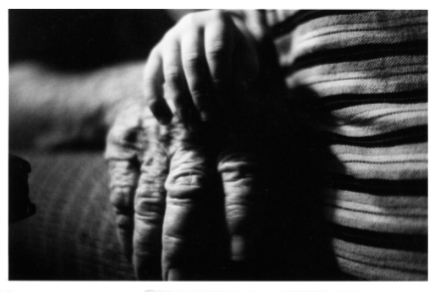
If you look deeply into the palm of your hand, you will see your parents and all generations of your ancestors. All of them are alive in this moment. Each is present in your body. You are the continuation of each of these people. To be born means that something which did not exist comes into existence. But the day we are “born” is not our beginning. It is a day of continuation. But that should not make us less happy when we celebrate our “Happy Continuation Day.”
Since we are never born, how can we cease to be? This is what the Heart Sutra reveals to us. When we have a tangible experience of non-birth and non-death, we know ourselves beyond duality. The meditation on “no separate self” is one way to pass through the gate of birth and death.
Your hand proves that you have never been born and you will never die. The thread of life has never been interrupted from time without beginning until now. Previous generations, all the way back to single-celled beings, are present in your hand at this moment. You can observe and experience this. Your hand is always available as a subject for meditation.
– Thich Nhat Hanh
space to choose
February 19, 2011
Freedom means being able to choose how we respond to things. When wisdom is not well developed, it can be easily obscured by the provocations of others. In such cases we may as well be animals or robots. If there is no space between an insulting stimulus and its immediate conditioned response—anger—then we are in fact under the control of others.
– Andrew Olendzki

throw another log on the fire
February 18, 2011
In the language of the Buddha, the word for fuel and for clinging is the same: upadana. The Buddha understood that suffering arises from and is fueled by clinging. When the fuel is removed, suffering is extinguished. By understanding how deep-rooted and subtle clinging is in our own unliberated minds, we come to appreciate the mind of nibbana (nirvana) as refreshingly cool and peaceful.
– Gil Fronsdal, “Nirvana: Three Takes”
no fear, no doubt
February 14, 2011
Intelligent practice always deals with just one thing: the fear at the base of human existence, the fear that I am not. And of course I am not, but the last thing I want to know is that. I am impermanence itself in a rapidly changing human form that appears solid. I fear to see what I am: an ever-changing energy field. I don’t want to be that. So good practice is about fear.
Fear takes the form of constantly thinking, speculating, analyzing, fantasizing. With all that activity we create a cloud cover to keep ourselves safe in make-believe practice. True practice is not safe; it’s anything but safe. But we don’t like that, so we obsess with our feverish efforts to achieve our verison of the personal dream. Such obsessive practice is itself just another cloud between ourselves and reality.
The only thing that matters is seeing with an impersonal searchlight: seeing things as they are. When the personal barrier drops away, why do we have to call it anything? We just live our lives. And when we die, we just die. No problem anywhere.
– Charlotte Joko Beck
mind and spirit
February 12, 2011
People must develop compassion and intellect equally. Otherwise we risk being kind-hearted rubes or mean-spirited experts. Intuition and analytic acumen are equally important, because the transcendent experiences of life are immeasurable, whereas for physical survival we rely exclusively on measured things.
~ DSK
natural laws
February 11, 2011
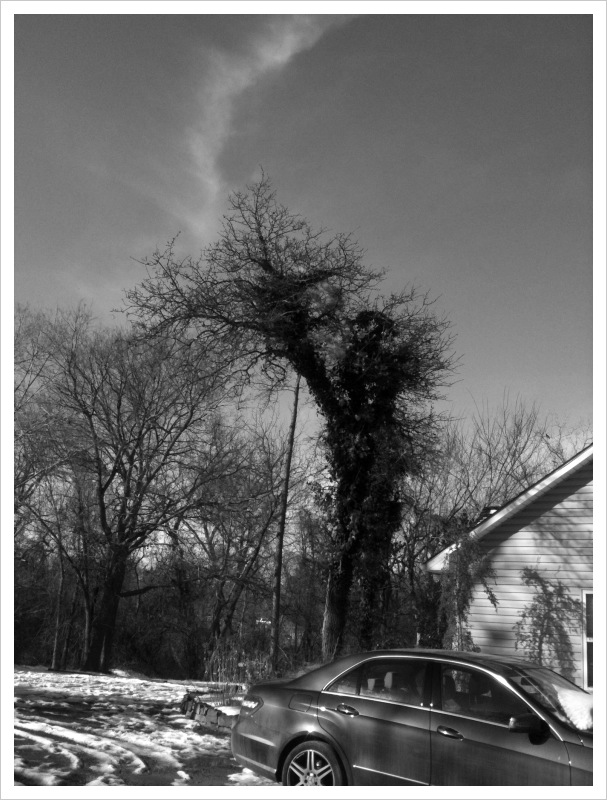
Shakyamuni Buddha taught that all material things are subject to laws. Birth, old age, sickness, and death are laws in themselves, and not problems that have to be solved through the power of human beings or through some other power. There is no “good” and “bad” in laws. Only through the intervention of people’s views does this notion of “good” and “bad” arise.
– Sekkei Roshi

afternoon sun
February 9, 2011
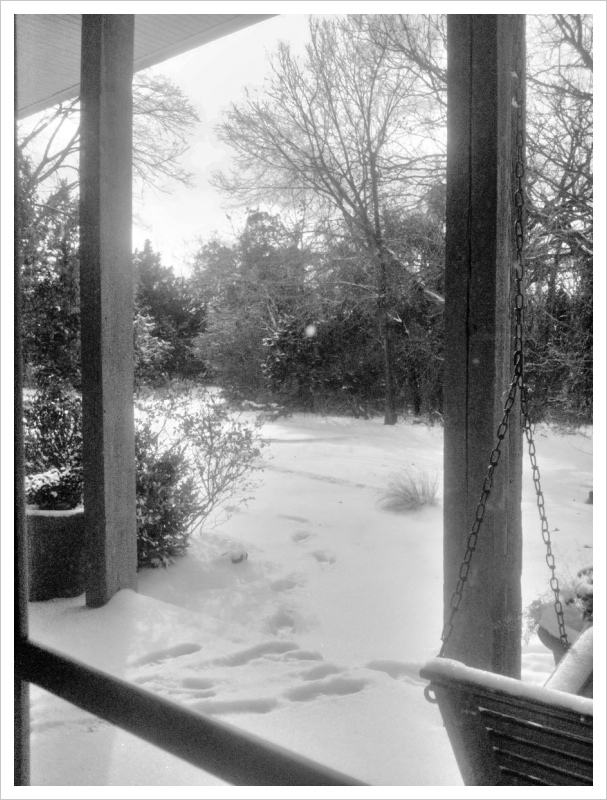
The afternoon sun reflecting
In snowflakes blowing from the trees,
Glistens beyond a million diamonds
And reminds me of the unmeasurable wealth,
That is mine merely by being its witness.
– DSK
you are the rain
February 8, 2011
If you notice the wonderful smell of the rain, instead of just moving quickly past the experience without deeply appreciating it, you can prolong your contact with this wonderful sensation. Pause for a moment and really let yourself experience the smell of the rain. If you are struck by the blueness of the sky, linger for a moment and breathe mindfully, taking in the wonderful blue color. Don’t rush past these marvelous experiences, treating them as if they are unimportant. To treat them as unimportant is ultimately to treat yourself as unimportant. This is your life: enjoy it!
– Thomas Bien
fundamental trust
February 7, 2011
In order to communicate very openly with the world, you need to develop fundamental trust. This kind of trust is not trusting "in" something, but simply trusting. It is very much like your breath. You do not consciously hold on to your breath, or trust in your breath, yet breathing is your very nature.
In the same way, to be trusting is your very nature. To be trusting means you are fundamentally free from doubt about your goodness and about the goodness of others.
– Dr. Jeremy Hayward
mind is matter, matter is mind
February 6, 2011
All methods aiming at the realization of awakening have their origin in your true nature. The true nature of everything is in your mind. Mind and matter are one, not two different things. Conditioning, servitude, and error do not truly exist. True and false, merit and sin, are illusory images.
So is the law of cause and effect. As long as your activity is based on conceptual discrimination, it is not free. The free person sees all, because he knows that there is nothing to be seen. He perceives all, not being deceived by concepts. When he looks at things, he sees their true nature. When he perceives things, he penetrates their nature of interbeing.
Thus, while living in the world he possesses the secret of the arising and manifestation of phenomena. This is the only way to arrive at awakening. Free of errors caused by concepts, he lives in peace and freedom, even in the world of karma. Using skillful means, he realizes his calling of awakening in this conditioned world, without thinking whether the world is conditioned or unconditioned.
– Cuu Chi, an eleventh-century Vietnamese monk of the Vo Ngon Thong sect