live light
August 15, 2010
We all know what it’s like to get trapped in dark, constricting states of mind—and how useless it is, in terms of awakening, to dwell there. That is exactly what the Buddha taught: we don’t need to stay stuck in greed, hatred, and delusion. Life can be lighter, more workable, even when it’s challenging.
This lightening up, which I see as an aspect of joy, is the fruit of insight into anatta, the selfless nature of reality, and anicca, the truth of impermanence. When we are not attached to who we think we are, life can move through us, playing us like an instrument.
Understanding how everything is in continual transformation, we release our futile attempts to control circumstances. When we live in this easy connection with life, we live in joy.
– James Baraz, “Lighten Up!”
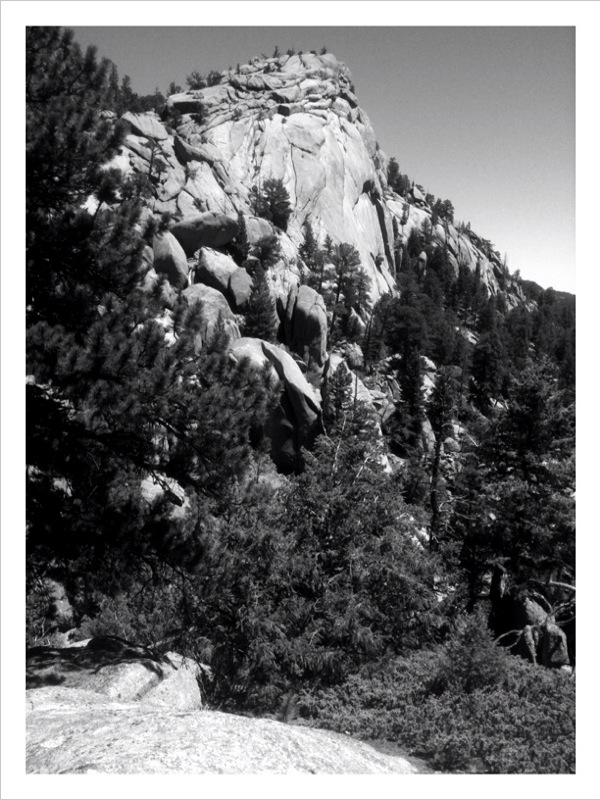
behold the kingdom of god
August 14, 2010
If we speak with the language of Christianity then mindfulness, concentration, and insight are the energy of God. With that energy we are able to stop, to be with the Kingdom right here, right now.
– Thich Nhat Hanh
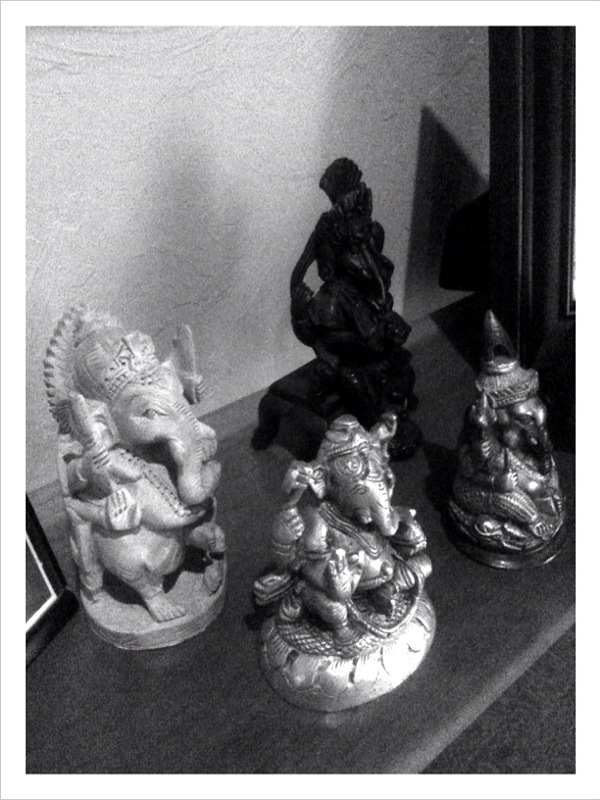
you are a happening, not an object
August 11, 2010
Through consistent practice we develop the skill of mindfulness, which allows us to detect with great precision the often subtle self-referential ideas and body sensations as they arise in each act of perception.
We also develop equanimity so that we can allow these ideas and body sensations to expand and contract without suppression, interference, or clinging.
Eventually, contact with the sense of self becomes so continuous that there is no time left to congeal or fixate it.
The self then becomes clarified in the sense that it is no longer experienced as an opaque, rigid, ever-present entity, but rather as a transparent, elastic, vibratory activity.
It loses “thingness.” We realize that it is a verb, not a noun; a wave, not a particle. According to this paradigm, what is let go of is the unconsciousness and “holding” associated with those ideas and body sensations which produce a sense of self. The sense of self becomes a home rather than a prison. You can come and go freely.
– Shinzen Young, “What Does Being a Buddhist Mean to You?”
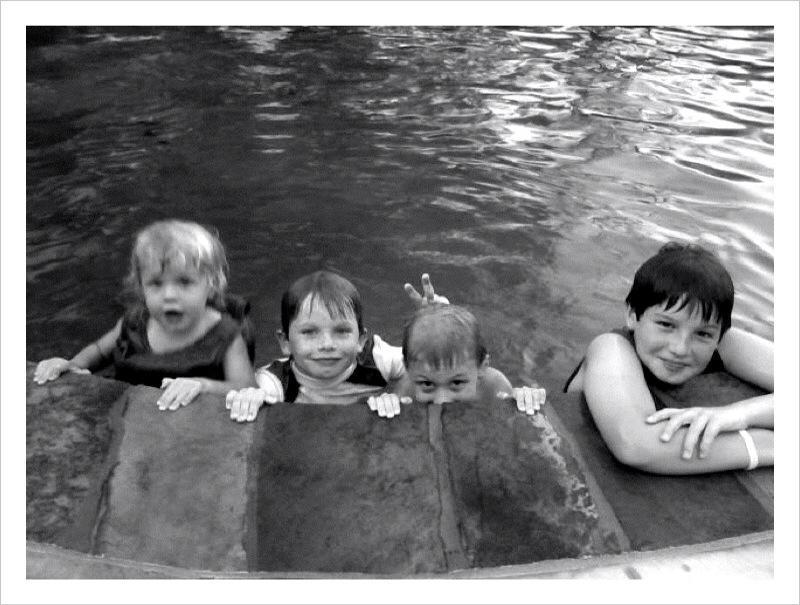
what are you waiting for?
August 7, 2010
Life passes like a flash of lightning
Whose blaze lasts barely long enough to see,
While earth and sky stand still forever.
How swiftly changing time flies across our face.
You who sit over your full cup and do not drink,
For what are you waiting?
– Li Po
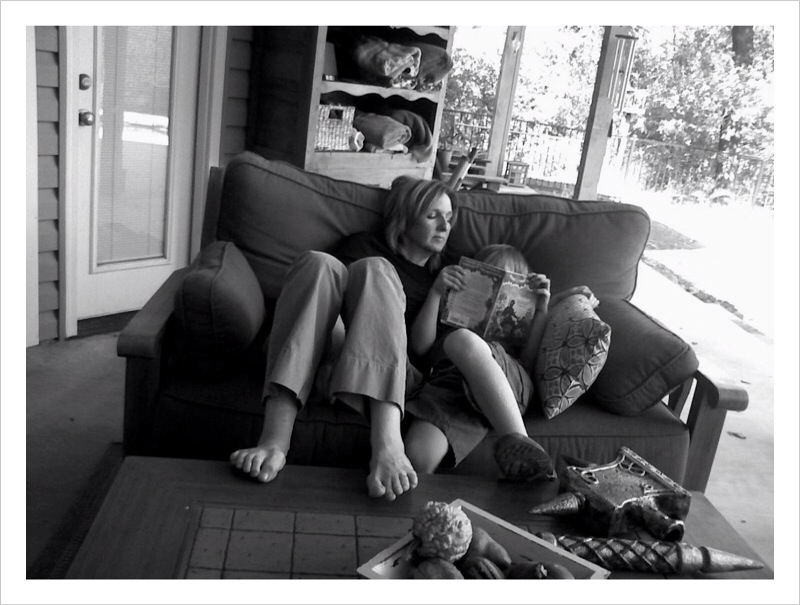
it’s like putting red paint on a rose
August 4, 2010
Cease from practice based on intellectual understanding, pursuing words, and following after speech, and learn the backward step that turns your light inward to illuminate your self. Body and mind of themselves will drop away, and your original face will be manifest.
– Dogen
silence and non-doing
July 31, 2010
Many people have some ambivalence about silence; they fear it, or don’t value it. Because we only know ourselves through thinking and speaking and acting. But once the mind gets silent, the range of what’s possible is immeasurable. So first you taste the silence. Then you realize that it’s not a vacuum or dead space. It’s not an absence of the real stuff; it’s not that the real stuff is the doing, the talking, and all that. You get comfortable in it and you learn that it’s highly charged with life. It’s a very refined and subtle kind of energy.
And when you come out of it, somehow you’re kinder, more intelligent. It’s not something that you manufacture—it’s an integral part of being alive. And it’s vast. We’ve enclosed ourselves in a relatively small space by thinking. It binds us in, and we’re not aware that we’re living in a tiny, cluttered room. With practice, it’s as if the walls of this room were torn down, and you realize there’s a sky out there.
Larry Rosenberg, The Art of Doing Nothing

there has to be a flip side
July 30, 2010
We know what we mean by white in comparison to black. We know life in comparison with death. We know pleasure in comparison with pain, up in comparison with down. But all these things must come into being together. You don’t have first something then nothing or first nothing then something.
Something and nothing are two sides to the same coin. If you file away the tails side of a coin completely, the heads side of it will disappear as well. So in this sense, the positive and negative, the something and the nothing, are inseparable – they go together. The nothing is the force whereby the something can be manifested.
– Alan Watts, from Nothingness

with or without words
July 28, 2010
The Dharma is devoid of words or appearances, but it is not separate from words and appearances. If you abandon words you are subject to distorted views and defilements; if you grasp at words, you are deluded as to the truth.
Students of the scriptures often abandon their inner work and pursue externals; some adepts prefer to ignore worldly activity and simply look inward. Both positions are biases which are bound at two extremes.
They are like fighting over whether a rabbit’s horns are long or short, or arguing whether flowers in the sky are profuse or scarce.
– Uichon (1055-1101)
coming out of the dark
July 28, 2010
Rationalism and Newtonian science has lured us into dark woods, but a new metaphysics can rescue us.
– Huston Smith
cultivating compassion
July 25, 2010
Boundaries play an interesting and sometimes complicated role in developing compassion. They are like the stake and wires that are used to help keep young trees rooted and growing straight. Early on in our practice or when we’re faced with difficult, new challenges, a lack of healthy boundaries can lead to our compassion being blown away before it’s had a chance to take root. As we develop, though, boundaries held too tightly can stifle our compassion and keep it from reaching maturity. In the process of developing compassion, we need to become skillful at knowing when to apply boundaries and when to relax or release them.
– Lorne Ladner, “Taking a Stand”


