here with you in the eternal now
June 14, 2010
I rest on the bank of a stream
Whose water is calm and clear.
After rain, the wisterias are clean,
The ancient rocks beautiful in the clouds.
The new green leaves are lovely,
And the falling flowers
Are still charming.
Green rocks equal embroidered
Folding screens,
Blue moss replaces a silk cushion.
I wonder what else is needed for a life.
Sitting with my chin in my hand,
I forget to return
It’s lonely, the sun sets
Above the mountain,
And evening smoke rises at the
Edge of the forest.
– Choeui Eusoon (1786-1866)
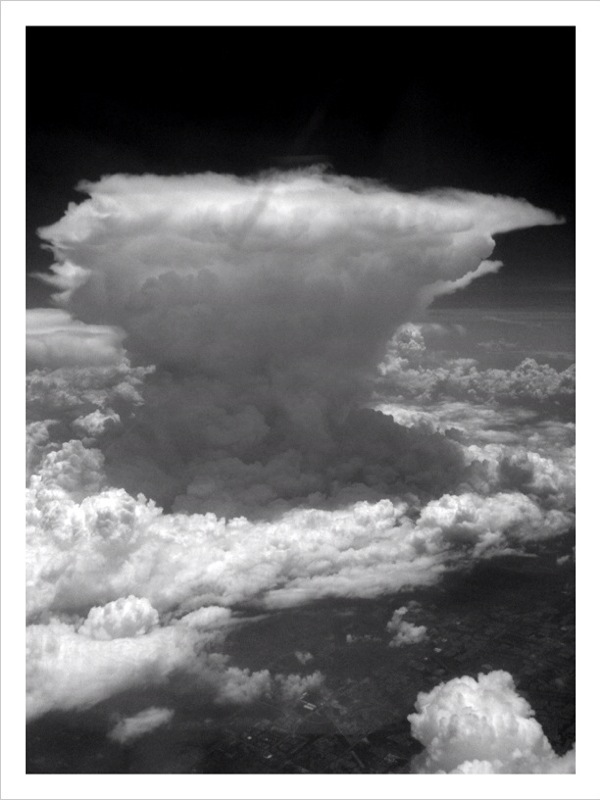
don’t get stuck
June 11, 2010
In Tibetan there is a word that points to the root cause of aggression, the root cause also of craving. It points to a familiar experience that is at the root of all conflict, all cruelty, oppression, and greed. This word is shenpa.
The usual translation is “attachment,” but this doesn’t adequately express the full meaning. I think of shenpa as “getting hooked.” Another definition, used by Dzigar Kongtrul Rinpoche, is the “charge”—the charge behind our thoughts and words and actions, the charge behind “like” and “don’t like.”
Here’s an everyday example: Someone criticizes you. She criticizes your work or your appearance or your child. In moments like that, what is it you feel? It has a familiar taste, a familiar smell. Once you begin to notice it, you feel like this experience has been happening forever. That sticky feeling is shenpa. And it comes along with a very seductive urge to do something.
Somebody says a harsh word and immediately you can feel a shift. There’s a tightening that rapidly spirals into mentally blaming this person, or wanting revenge, or blaming yourself. Then you speak or act. The charge behind the tightening, behind the urge, behind the story line or action is shenpa.
– Pema Chödrön, from “Don’t Bite the Hook”

fame = shenpa
June 11, 2010
Gain and renown are hindrances
To students of the Way;
They taint our purity of heart.
Uncentered,
How can we comprehend Tao?
– Loy Ching-Yuen (1873-1960)

join the party
June 9, 2010
This is work that is alive,
Effervescent, free, liberated,
Gloriously enlightened,
True, and great.
Do you think it can be attained
By people who shut the door
And sit quietly with blank minds?
– Liu I-Ming

measure the sky
June 8, 2010
Its boundary is wider than the world,
But where to find a trace of it
Once relativity is broken?
Only fools examine their own hearts
It’s like measuring the sky or binding the wind.
– Chunkyung Haewon (1691-1770)

reading under the tree
June 3, 2010
I live beneath a green cliff
The weeds I don’t mow flourish in the yard
New vines hang down all twisted together
Old rocks rise up straight in precipitous shapes
Monkeys pick the mountain fruit
Egrets catch the pond fish
With one or two of the immortals’ books
Beneath the trees I mumble, reading aloud.
– Han Shan (c 730)
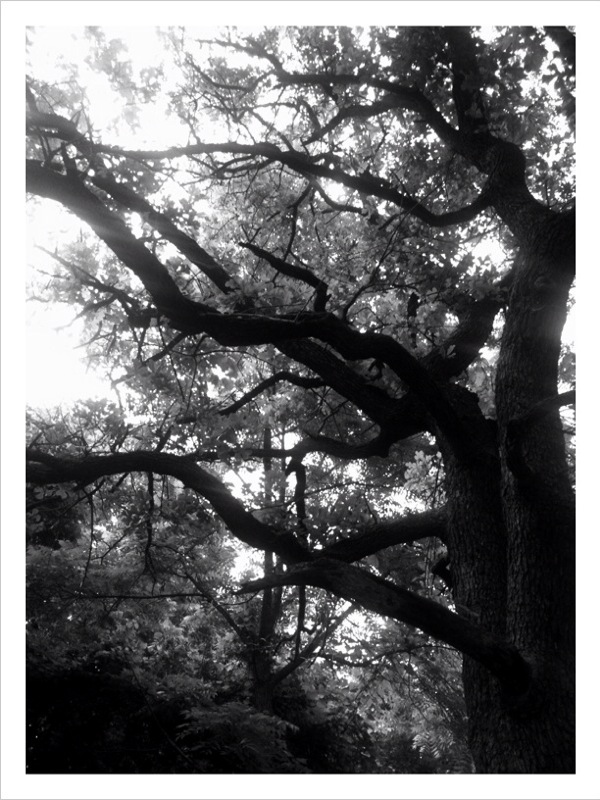
the Way
June 2, 2010
Do not remain in the dualistic state;
Avoid such pursuits carefully.
If there is even a trace
Of this and that, right and wrong,
The Mind-essence will be lost in confusion.
Although all dualities come from the One,
Do not be attached even to this One.
When the mind exists undisturbed in the Way,
Nothing in the world can offend,
And when a thing can no longer offend,
It ceases to exist in the old way.
– Seng Ts’an (d. 606)
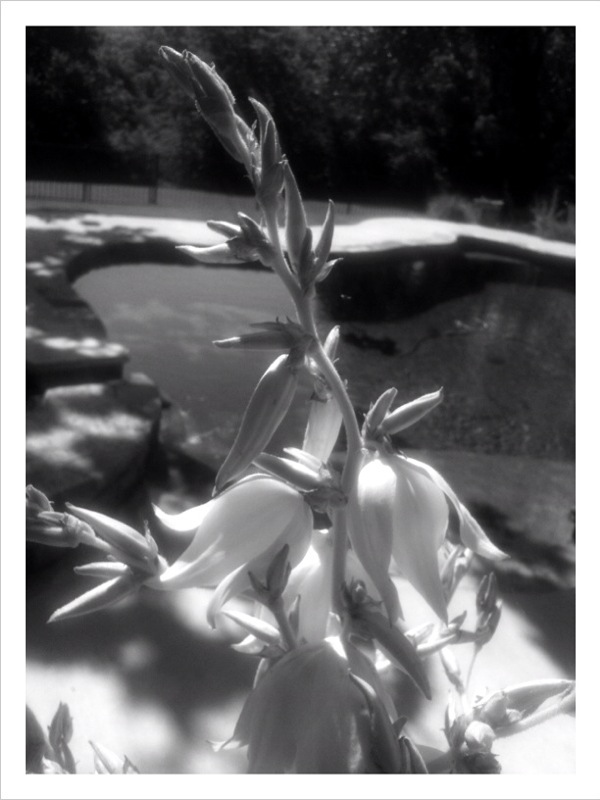
particles and waves
May 31, 2010
Particles, the building blocks of the universe, remain possibility waves until they’re observed. Energy and matter are potentials within consciousness. Consciousness translates electromagnetic vibrations into sound, texture, taste, smell, and form. We call our internal experience from our five senses the external world.
– Deepak Chopra, via Twitter

think for yourself
May 31, 2010
Don’t go by reports, by legends, by traditions, by scripture, by logical conjecture, by inference, by analogies, by agreement through pondering views, by probability, or by the thought, “This contemplative is our teacher.”
When you know for yourselves that “these mental qualities are skillful; these mental qualities are blameless; these mental qualities are praised by the wise; these mental qualities, when adopted and carried out, lead to welfare and to happiness” — then you should enter and remain in them.
– Thanissaro Bhikkhu, from Faith in Awakening

bitter sweet
May 30, 2010
Because Zen and Doctrine
Have the same origin and taste,
Don’t judge them bitter or sweet
According to your own lights.
If you chase after heaving waves,
You’ll probably have to ask
Directions to the ferry.
– Soyo Taeneung (1562-1649)

 You Are IT