laughing like kids
September 3, 2010
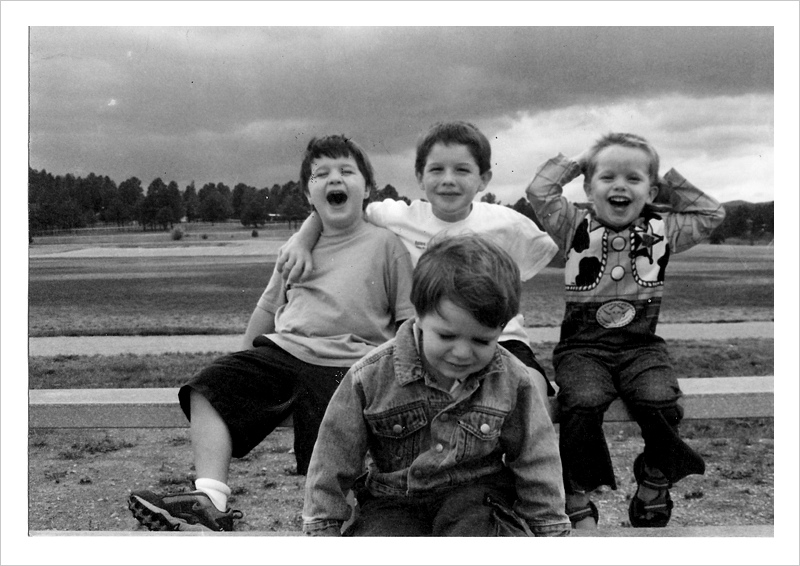
It is self-evident that we are all perfectly born. Yet upon our birth, a delusional world immediately sets out to wrap a superfluous ego around our perfection. Like a gauze, year-after-year it wraps around our true mind, binding us SO TIGHT, that by the time we are adults, we have no idea who we really are.
Regardless of who we are or what tradition we follow, our faith and our practice, and our seeking, are merely manifestations of an “unwrapping” of that ego-gauze. A hopeful attempt to find the original and perfect YOU.
That perfection, that light and spirit, simply got covered up and hidden under all the worldly, delusional wrapping. The “eternal you” that has no beginning and never dies, has been “right here” the whole time.
The Perennial Philosophy — the core and ground of all of the world’s great seeking traditions — points consistently and continuously to the concept of, “becoming once again as a little child”. Returning to our childhood-state is a base prerequisite for reclaiming our true selves.
Therefore, laughing as a child laughs — large, open, truthful — is one of the purest, most critical components of anyone’s path to reality.
– Scott Kinnaird, 9/3/10
nameless reality
September 1, 2010
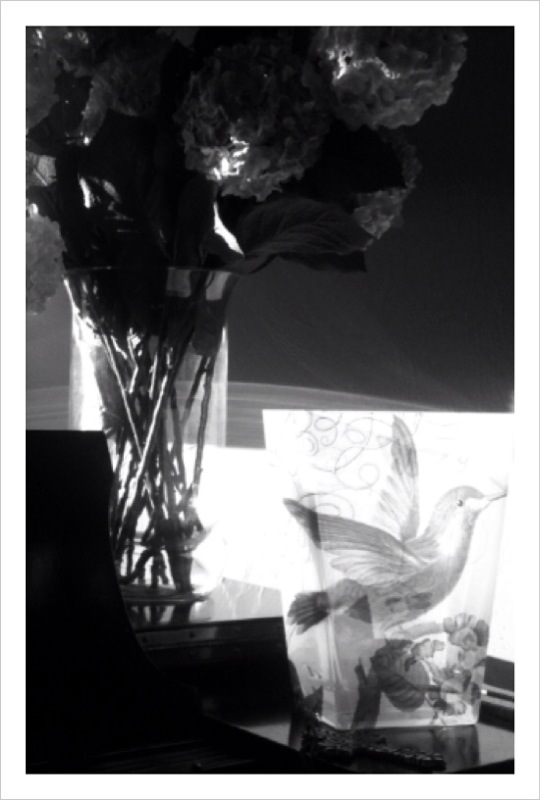
Well versed in the Buddha way,
I go the non-Way.
Without abandoning my ordinary man’s affairs,
The conditioned name-and-form
All are flowers in the sky.
Nameless and formless,
I leave birth-and-death.
– Layman P’ang (740-808)
time and again
September 1, 2010
Time can only disclose or unfold itself in our “now,” and as it does, all of time and all the world unfolds too. They cannot be separated. We stand in the center of what Dogen calls “arraying ourselves” as simultaneous observers, participants, and creators. Fields, grass, flowers, and wind always appear in the “now” that is ever one and ever renewing.
Dogen has a word for this unity: being-time, or uji. To be is to be time. “As the time right now is all there is,” Dogen writes, “each being-time is without exception entire time.” In the context of Dogen and, perhaps, much of Buddhist understanding, the presence of the present is the only time you have.
– Adam Frank, “Time & Again”
judge not lest ye be judged
August 28, 2010
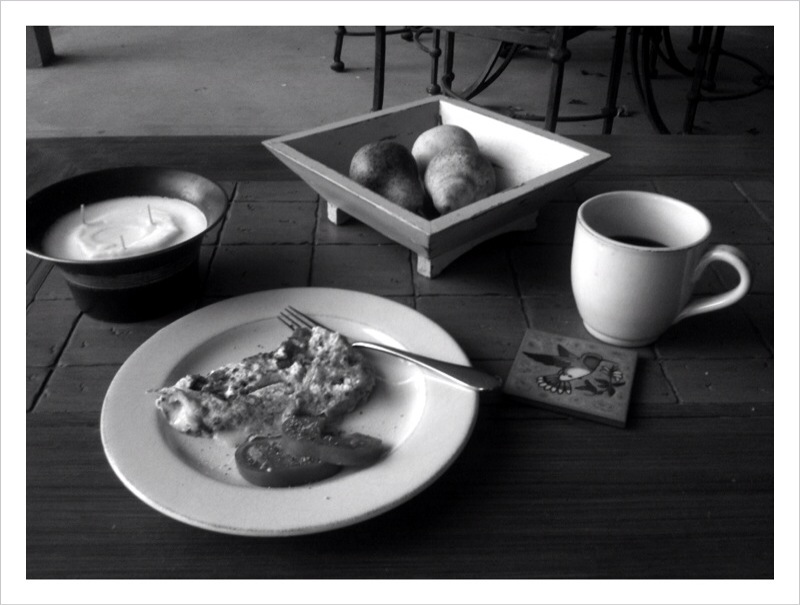
The results of Karma cannot be known by thought and so should not be speculated about. Thus thinking, one would come to distraction and distress.
Therefore, Ananda, do not be the judge of people; do not make assumptions about others. A person is destroyed by holding judgments about others.
– From the Anguttara Nikaya
the interior life
August 28, 2010
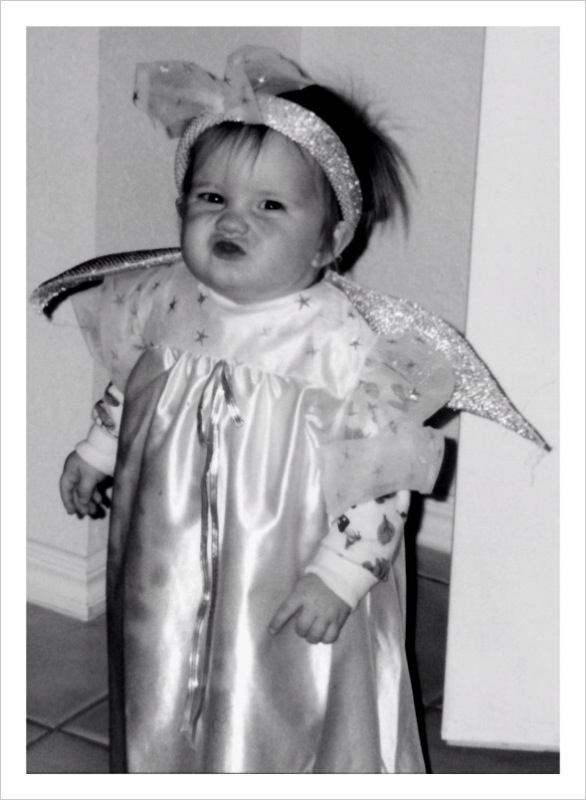
Anyone who enjoys inner peace is no more broken by failure than he is inflated by success. He is able to fully live his experiences in the context of a vast and profound serenity, since he understands that experiences are ephemeral and that it is useless to cling to them. There will be no “hard fall” when things turn bad and he is confronted with adversity. He does not sink into depression, since his happiness rests on a solid foundation.
One year before her death at Auschwitz, the remarkable Etty Hillesum, a young Dutchwoman, affirmed: “When you have an interior life, it certainly doesn’t matter what side of the prison you’re on. I’ve already died a thousand times in a thousand concentration camps. I know everything. There is no new information to trouble me. One way or another, I already know everything, and yet, I find this life beautiful and rich in meaning. At every moment.”
– Matthieu Ricard, from “A Way of Being”
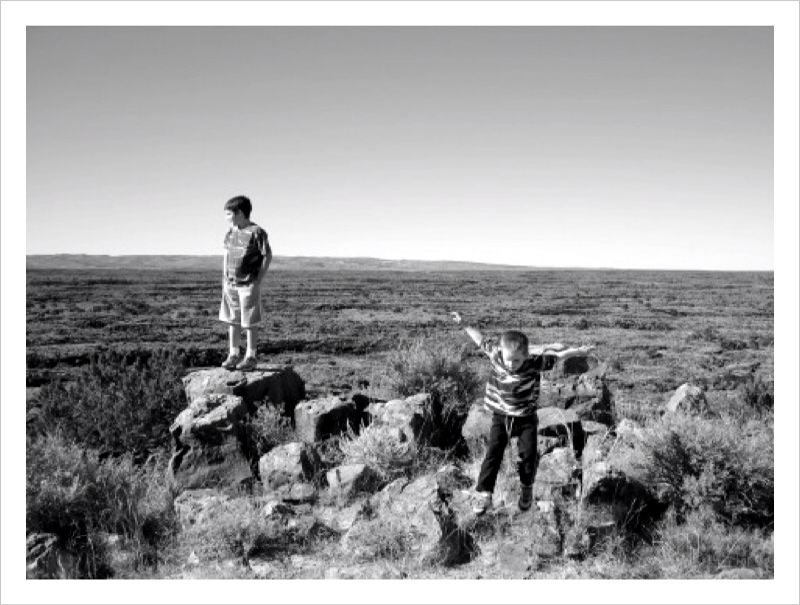
boys in the woods
August 25, 2010
Emptiness is a name for nothingness,
A name for ungraspibility,
A name for mountains, rivers, the whole earth.
It is also called the real form.
In the green of the pines,
The twist of the brambles,
There is no going and coming;
In the red of the flowers
And the white of the snow,
There is no birth and no death.
– Ryusai

life is a beach
August 24, 2010
Buddhist practice is not about forcing ourselves to be natural. It is about being ourselves. When we take the vows of refuge, we are also pledging to find the refuge that exists within our own lives. This taking of refuge is not some kind of evasion or escape, but is the planting of our “selves” deeply in the nature of what surrounds us. We lodge ourselves in the deep waves and in the shallow pools, in the crests and depressions of our lives. Sometimes, even wreckage can make a temporary resting place.
A person whose life is in tatters might have nothing much else left to do but relax and look at the pieces of what’s left. Maybe this is the reason that so many of us are drawn to the sea and to the wildness of its coasts. The beaches display a confused but somehow soothing amalgam of particles: bits and pieces of once-living organisms, cracked plastic remnants of human creation, rubber wheels, oilcloth, mesh, fishing line. The sands are a haven for the dense and the reflective, the many failed items that were meant to last forever.
This evidence of the transitory is really what Buddhism is all about: the daily give-and-take of living, the constant awareness of time, the fleeting opportunities for new discovery.
– Gary Thorp, from “Shelter from the Storm”

complete liberation
August 22, 2010
In the language of the Buddha, the word for fuel and for clinging is the same: upadana. The Buddha understood that suffering arises from and is fueled by clinging.
When the fuel is removed, suffering is extinguished. By understanding how deep-rooted and subtle clinging is in our own unliberated minds, we come to appreciate the mind of nibbana (complete liberation) as refreshingly cool and peaceful.
– Gil Fronsdal, from “Three Takes on Nirvana”
remain unmoved by things
August 22, 2010
Comprehending the fundamental,
Embracing the spirit,
Roam the root of heaven and earth,
Wander beyond the dust and dirt,
Travel to work with non-involvement.
Take care not to let mechanical
Intelligence burden your mind;
Watch what is not temporal
And remain unmoved by things.
– Lao Tzu
no confusion
August 20, 2010
Sages lean on a pillar
That is never shaken,
Travel a road that is
Never blocked, are
Endowed from a
Resource that is never
Exhausted, and learn From a teacher that
Never dies. They are successful In whatever they undertake,
And arrive wherever they go.
Whatever they do, they
Embrace destiny and go along
Without confusion.
– Wen-tzu
 You Are IT